Skip to content Websprint

Seismic liquefaction risk evaluation

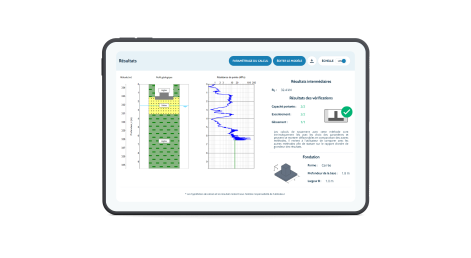
Websprint© enables the analysis of liquefaction risk under seismic loads, based on the analysis and interpretation of in situ tests and in accordance with international recommendations.

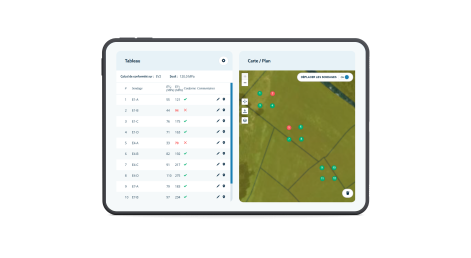
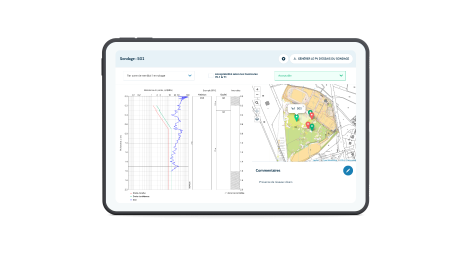
Leverage your SPT, CPT, Vs and dynamic penetrometers (Panda® and Grizzly® DPSH) to assess the seismic risk of liquefaction with a robust and traceable approach.

The Websprint© liquefaction module allows:

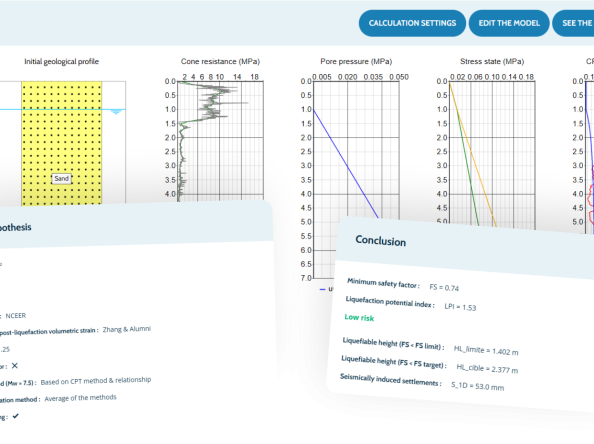
  • FSliq safety factor assessment (CSR/CRR);
  • Estimation of post-seismic settlements;
  • Calculating the Liquefaction Potential Index (LPI);
  • Analysis of susceptibility to liquefaction.

All this is consistent with the NCEER methodology (Youd et al., 2001) and the French AFPS recommendations (CT45, 2021).

Websprint© is currently the only software that allows an integrated exploitation of data from:
  • Standard Penetration Test (SPT) (ISO 22476-3; ASTM D1586);
  • Cone Penetration Test (CPT) (ISO 22476-1; ASTM D5778);
  • Shear wave velocity (Vs) (Andrus & Stokoe, 2000; Kayen et al., 2013);
  • Dynamic penetrometers (PANDA®, DPSH, Grizzly®) (ISO 22476-2).
EN Liquefaction 1

Test multiple scenarios, document your hypotheses, and share your projects in just a few clicks.

Compliant with NCEER recommendations and Eurocode 8, Websprint© offers you more reliable, faster and fully justified engineering.

Geographical and geological data:

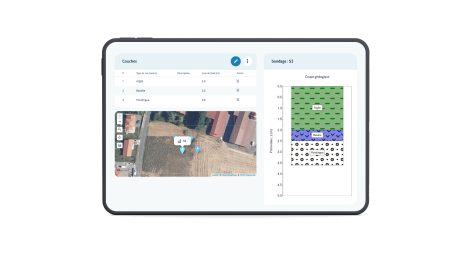
  • Fill in the location of your project, the type of soil and the Eurocode 8 assistant, will allow you to set up the seismic hypotheses in a coherent way and help you calculate the PGA (Peak Ground Acceleration) and the MSF (Magnitude Scaling Factor)
  • Fill in the lithological profile and the positioning of the water table in order to analyze the susceptibility to the occurrence of the liquefaction phenomenon.

Geotechnical surveys:

Work with sounding results:

  • Standard penetration test (SPT) (ISO 22476-3;  ASTM D1586);
  • CPT (ISO EN 22476-1; ASTM D5778-20);
  • Shear wave velocity (Vs);
  • Panda® and Grizzly® Dynamic Penetrometers® (ISO EN 22476-2).

Implemented calculation methods:

Based on the geotechnical soundings available on the site studied, apply:

  • Method based on the results of the SPT (Seed et al. 1985; Youd et al. 2001);
  • CPT-based methods (Robertson & Wride, 1998; Youd et al. 2001);
  • Method based on Vs values (Andrus & Stokoe, 2000; Kayen et al. 2013; PEER Report 2013/01);
  • Method based on the results of dynamic penetration tests (Panda® and Grizzly® DPSH) based on correlations with the SPT and the CPT (Lepetit, 2001; Villavicencio et al. 2010).

Results achieved:

  • FSLiq safety factor in the face of liquefaciton risk (Seed & Idriss 1971, 1982; Youd et al. 2001);
  • Post-seismic soil compaction (Zang et al. 2002; Idriss and Boulanger, 2008; 2014; 2018);
  • Liquefaction Potential Index (LPI) (Iwasaki et al., 1982).

Productivity:

Fully exploit your geotechnical surveys (SPT, CPT, Vs or dynamic cone penetrometers) to test several hypotheses and models. Websprint© allows you to systematically explore the risk of liquefaction, to understand its sensitivity to geotechnical parameters, and to document your technical choices :
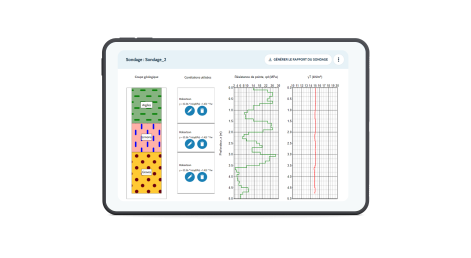
  • Automated analysis of calculation assumptions and in-situ data;
  • Backup and reuse of projects and reports;
  • Easier collaboration with your teams and partners.

Discover the other Websprint© modules

Need help ?

Our FAQ answers the most frequently asked questions.

See the FAQs